

 Daisy E. Wilkins
BitcoinWorld
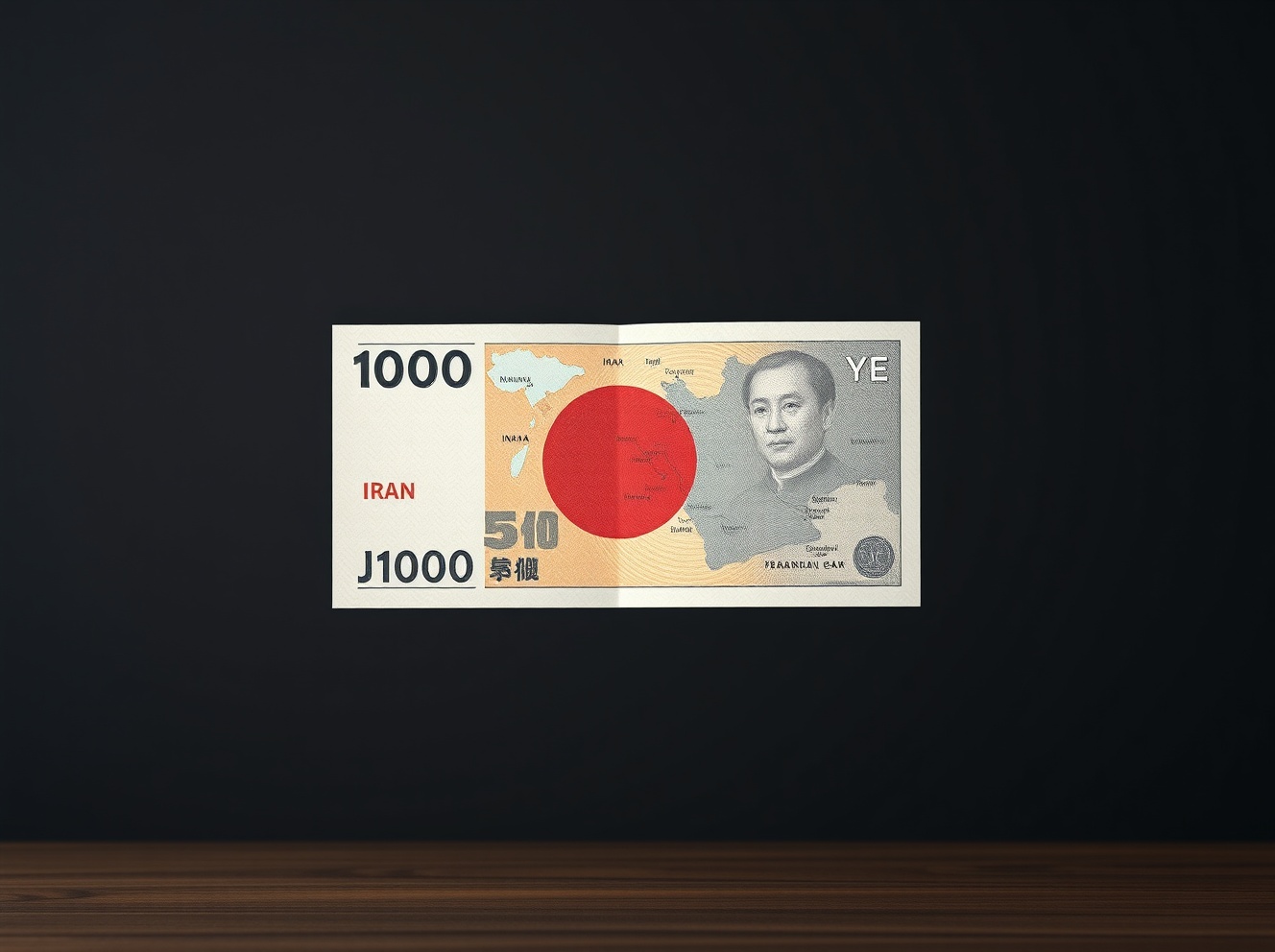
Japanese Yen Plummets as Renewed US-Iran Tensions Rattle Global Currency Markets
TOKYO, March 2025 – The Japanese Yen edged notably lower in Asian trading sessions today, continuing a multi-day slide as renewed geopolitical friction between the United States and Iran triggered a significant shift in global capital flows. Consequently, market participants rapidly moved away from traditional safe-haven assets, seeking higher yields elsewhere. This movement reflects a complex interplay between risk sentiment and monetary policy expectations. Furthermore, analysts point to specific military developments in the Strait of Hormuz as the immediate catalyst for the currency’s weakness.
Japanese Yen Depreciation and Geopolitical Catalyst
The USD/JPY pair surged past the 158.00 level, marking its highest point in over a month. Simultaneously, the Yen weakened against a basket of major currencies, including the Euro and British Pound. This depreciation follows reports of escalated naval posturing by both US and Iranian forces in a critical global oil transit route. Historically, the Yen often strengthens during global uncertainty. However, the current dynamic appears inverted due to concurrent pressures from divergent central bank policies. The Bank of Japan maintains an ultra-accommodative stance, while the Federal Reserve signals prolonged higher rates.
Market data reveals a sharp increase in selling volume for Yen futures. For instance, the Chicago Mercantile Exchange reported a 25% spike in short Yen contracts over the past 48 hours. This activity underscores a deliberate repositioning by institutional investors. Key factors driving this trend include:
- Carry Trade Dynamics: The significant interest rate differential between Japan and the US makes funding investments with Yen attractive.
- Commodity Price Shock: Rising oil prices threaten Japan’s import bill, worsening its trade balance.
- Risk-On Sentiment Shift: Surprisingly, equity markets showed resilience, reducing demand for safe-haven currencies.
Historical Context of US-Iran Tensions and Forex Impact
Geopolitical events in the Middle East consistently create volatility in currency markets. Notably, the assassination of General Qasem Soleimani in 2020 caused a temporary Yen spike that quickly reversed. Similarly, tensions surrounding Iran’s nuclear program in 2021 led to prolonged commodity-driven currency movements. The current situation features unique 2025 characteristics, including tighter global liquidity and coordinated Western sanctions on Iranian oil exports. These factors amplify the market’s reaction.
The following table compares recent geopolitical events and their impact on the JPY/USD pair:
| Event | Date | JPY/USD Initial Move | Sustained Trend |
|---|---|---|---|
| US Drone Strike (Soleimani) | Jan 2020 | +2.1% (Stronger JPY) | Reversed within 5 days |
| Iran Nuclear Talks Collapse | Jun 2021 | -1.8% (Weaker JPY) | Continued weakening for 3 weeks |
| Strait of Hormuz Incident | Mar 2025 | -2.4% (Weaker JPY) | Ongoing (Analysis Period) |
Expert Analysis on Currency Market Mechanics
Dr. Kenji Tanaka, Chief Economist at the Tokyo Institute for Monetary Studies, provided context. “The Yen’s reaction seems counterintuitive but follows a clear logic,” Tanaka explained. “Markets now perceive prolonged Middle East instability as a persistent inflationary shock. This perception reinforces expectations for higher US interest rates, which directly weakens the Yen. Additionally, Japan’s heavy reliance on imported energy creates a specific vulnerability.” This analysis aligns with recent statements from the Bank of Japan, which highlighted external risks to the nation’s fragile economic recovery.
Market technicians also identify a critical breach of the 157.50 support level. This breach triggered automated selling algorithms, accelerating the downward move. Consequently, the next major technical support for the Yen rests near the 160.00 level against the Dollar. Meanwhile, the Japanese Ministry of Finance maintains its standard stance of monitoring moves with “great interest,” but has not indicated readiness for intervention.
Broader Economic Impacts and Market Implications
The weakening Yen produces immediate winners and losers within the Japanese economy. Major exporting corporations, such as Toyota and Sony, typically benefit from a more competitive currency. Conversely, Japanese consumers and small businesses face higher costs for imported goods and raw materials. This dynamic could complicate the Bank of Japan’s path toward policy normalization. Inflation, driven by cost-push imports, may rise without corresponding wage growth, squeezing household budgets.
Globally, the move affects other asset classes. For example, gold prices exhibited only a muted rise, suggesting the market views this as a regional rather than systemic crisis. Furthermore, US Treasury yields edged higher as capital flowed toward dollar-denominated assets. The ripple effects extend to Asian emerging markets, which often see capital outflows during regional risk-off events. Key implications include:
- Portfolio Rebalancing: Global fund managers reduce Yen-weighted holdings.
- Hedging Activity Spike: Corporations increase forward contracts to lock in exchange rates.
- Central Bank Watch: Increased scrutiny on BOJ’s next policy meeting communication.
Conclusion
The Japanese Yen’s decline amid US-Iran tensions illustrates the evolving nature of safe-haven assets in a complex geopolitical landscape. While traditionally a refuge, the Yen now contends with structural economic policies and global inflationary pressures that can invert its typical response. The situation underscores the critical link between Middle East stability and global currency markets. Moving forward, traders will closely monitor diplomatic channels and oil price trajectories. The Japanese Yen’s trajectory will likely depend on the duration of the crisis and the subsequent policy responses from Tokyo and Washington.
FAQs
Q1: Why is the Japanese Yen weakening during geopolitical tension?
Typically, the Yen strengthens as a safe-haven asset. However, the current tensions specifically threaten oil supply routes, which hurts Japan’s import-dependent economy and reinforces expectations for higher US interest rates, making the Dollar more attractive relative to the Yen.
Q2: What is the “carry trade” and how does it affect the Yen?
The carry trade involves borrowing in a low-interest-rate currency (like the Yen) to invest in higher-yielding assets elsewhere. When global risk sentiment is stable or seeking yield, this increases selling pressure on the Yen, contributing to its weakness.
Q3: How does the Bank of Japan’s policy influence the Yen’s value?
The BOJ maintains ultra-low interest rates and yield curve control to stimulate the domestic economy. This policy divergence with central banks like the US Federal Reserve, which has higher rates, creates a fundamental pressure for the Yen to depreciate against the Dollar.
Q4: Could the Japanese government intervene to strengthen the Yen?
Yes, the Ministry of Finance can authorize the BOJ to conduct foreign exchange intervention by selling Dollars and buying Yen. However, intervention is rare and typically reserved for disorderly, speculative moves rather than trend-driven declines influenced by fundamentals.
Q5: What other currencies are considered safe havens besides the Yen?
The US Dollar and Swiss Franc are the other primary traditional safe-haven currencies. Gold is also a major non-currency safe-haven asset. The relative performance of these assets during a crisis depends on the specific nature and location of the geopolitical risk.
This post Japanese Yen Plummets as Renewed US-Iran Tensions Rattle Global Currency Markets first appeared on BitcoinWorld.
